East Tytherley: St Peter
Thorngate and Blackwater Churches
East Tytherley Church
East Tytherley is a small village with a population of around 200, spread across just over 1000 hectares. East Tytherley has three entries in the 1086 Doomsday Book, with 15.4 households. In the early 13th century, the parkland was enclosed with a ditch and hedge probably by Michael de Columbars, with some of the ancient boundary or ‘Park Pale’ still visible.
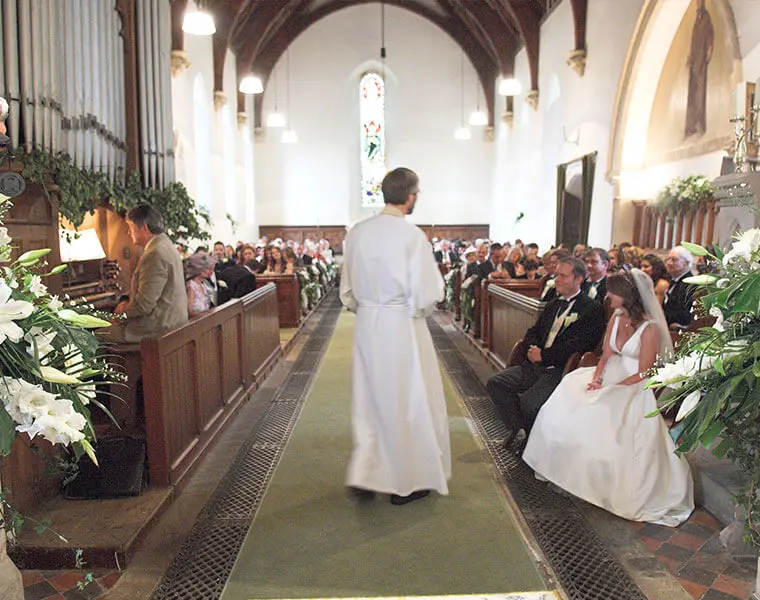
St Peters church East Tytherley likewise has a long history. It was in 1171 -Jocelin de Bohon, Bishop of Salisbury, at the request of Henry, Bishop of Winchester, dedicates the church at East Tytherley to St Peter. Inside the church look out for the large mural of St Peter to which was commissioned by Mr Hugh Dalgety (long time Lord of the Manor) and his wife, as a farewell gift to the church when they moved away in 1983. The artist was Mr Jonathan Trowell.
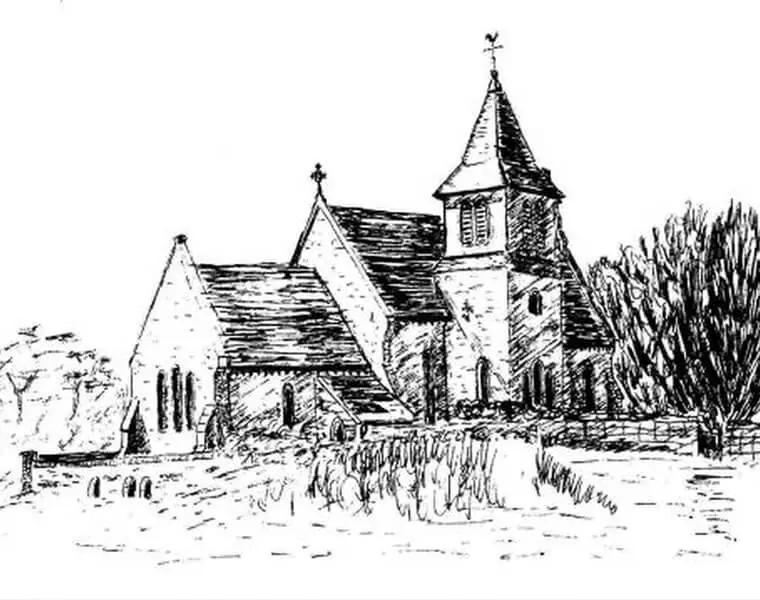
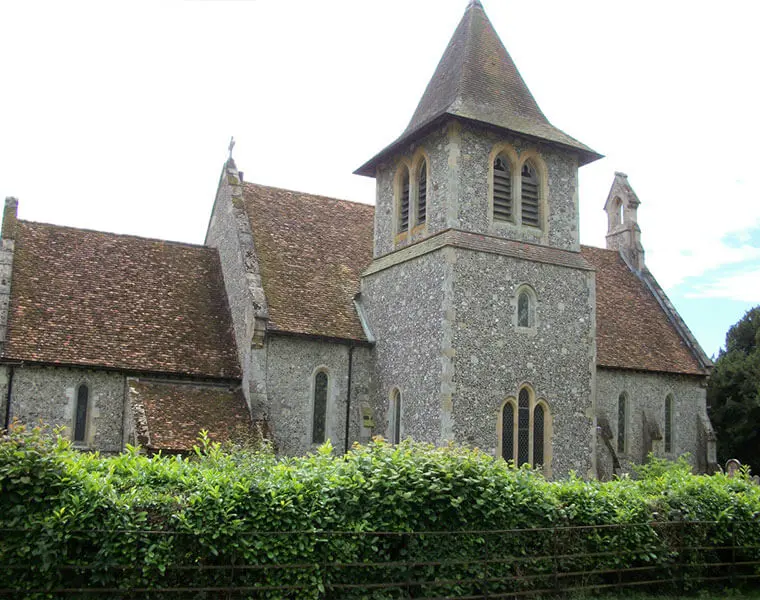
The pretty flint and stone faced church now stands in an isolated but picturesque position surrounded by fields, but in medieval times it would have been within the complex of the Royal Manor House of East Tytherley, with the lost medieval village close by. As with many villages, the Black Death of 1349 killed a large proportion of the village, rumoured to have been brought to the village by Queen Phillipa bringing her courtiers from London to the Manor House which at that time was owned by her.
In the chancel you are still able to see some fragments of ancient 13th century glass which are among the most important remains of early stained glass in the Diocese.
Records show that during the time of Richard II (1367- 1400) the manorial buildings were disposed about two courts, with the residential apartments in the inner, and the barns, sheds and farmhouse buildings in the outer court. Between the two courts was a lead-roofed gatehouse with chambers, called ‘la Wardour’.
Buildings in the inner court, included the hall, chapel, and king’s chamber.
The last Manor House building which stood to the South East corner of the church was carefully demolished and removed in 1903. Much of it was reused around the village, including wood panelling being installed at the rear (West wall) of the church, and the balustrade being used as the alter rail.
During the 1800’s the church was heavily restored with many alterations being made including the addition of a north porch, bell tower, vestry, south transept, and the buttresses which now support the walls and raising the floor level which covered several memorial stones. Before the alterations the church was entered through a south porch, down three steps. The present entrance, gave access to the burial ground.
Within the churchyard is a veteran Yew, and outside the churchyard gate stands a fine Wellingtonia planted in 1887 to commemorate the Golden Jubilee of Queen Victoria. The fine cedars of Lebanon in the parkland were planted about 1787, by Denys Rolle, Lord of the Manor 1750-1797.
Services are held throughout the year and volunteers from the community look after the building keeping the churchyard maintained and the inside clean. Should you visit in Spring, you’ll be sure to see the newborn lambs in the surrounding fields. Fundraising for the church is a year on year challenge, but the annual Country Fayre certainly goes a long way in helping, and continues to be a popular event.

East Tytherley: St Peter
Contact Detail Links
Facilities
Safeguarding
The parish of East Tytherley is committed to the safeguarding of children, young people and adults. We follow the House of Bishops guidance and policies and have our own Parish Safeguarding Officer, PSO. The Diocese of Winchester’s safeguarding pages contain vital links and information including contacts for the Diocesan Safeguarding Advisor (DSA) who advise our PSOs. If you are concerned that a child or adult has been harmed or may be at risk of harm please contact the DSA. If you have immediate concerns about the safety of someone, please contact the police and your local authority Children or Adults Services.
Gallery